

Herbal Tooth Powder vs Toothpaste: What Ayurveda Recommends for Daily Oral Care
Dr Rucha Mehendale PaiBy Dr Rucha Mehendale Pai, BAMS — Ayurvedic Physician & Nadi Parikshan Expert
Key Takeaways
- Ayurveda has always treated oral care (danta shuddhi) as part of the morning dinacharya.
- Herbal tooth powders and modern toothpaste both have a place — they aren't strictly "either/or".
- Herbal powders like Dhavaldanti are traditionally used for gum comfort and fresh breath.
- See a dentist for any bleeding gums, persistent pain, or cavities — oral care routines are a supplement, not a substitute, for dental treatment.
Every few months, someone asks us the same question: "Should I switch from toothpaste to a herbal tooth powder?" The honest answer is that it isn't really a competition — the two serve slightly different purposes, and understanding that helps you build a more complete oral care routine.
What Ayurveda Says About Oral Care
Classical Ayurvedic dinacharya (daily routine) places danta dhavana — cleaning of the teeth — right at the start of the day, often alongside jihwa nirlekhana (tongue scraping) and gandusha (oil pulling). The herbs traditionally used in tooth powders — babul (acacia), khadira (catechu), clove, and rock salt among others — were chosen for their astringent (kashaya) and mild-cleansing properties, valued for supporting healthy-looking gums and fresh breath.
Herbal Tooth Powder: What It Offers
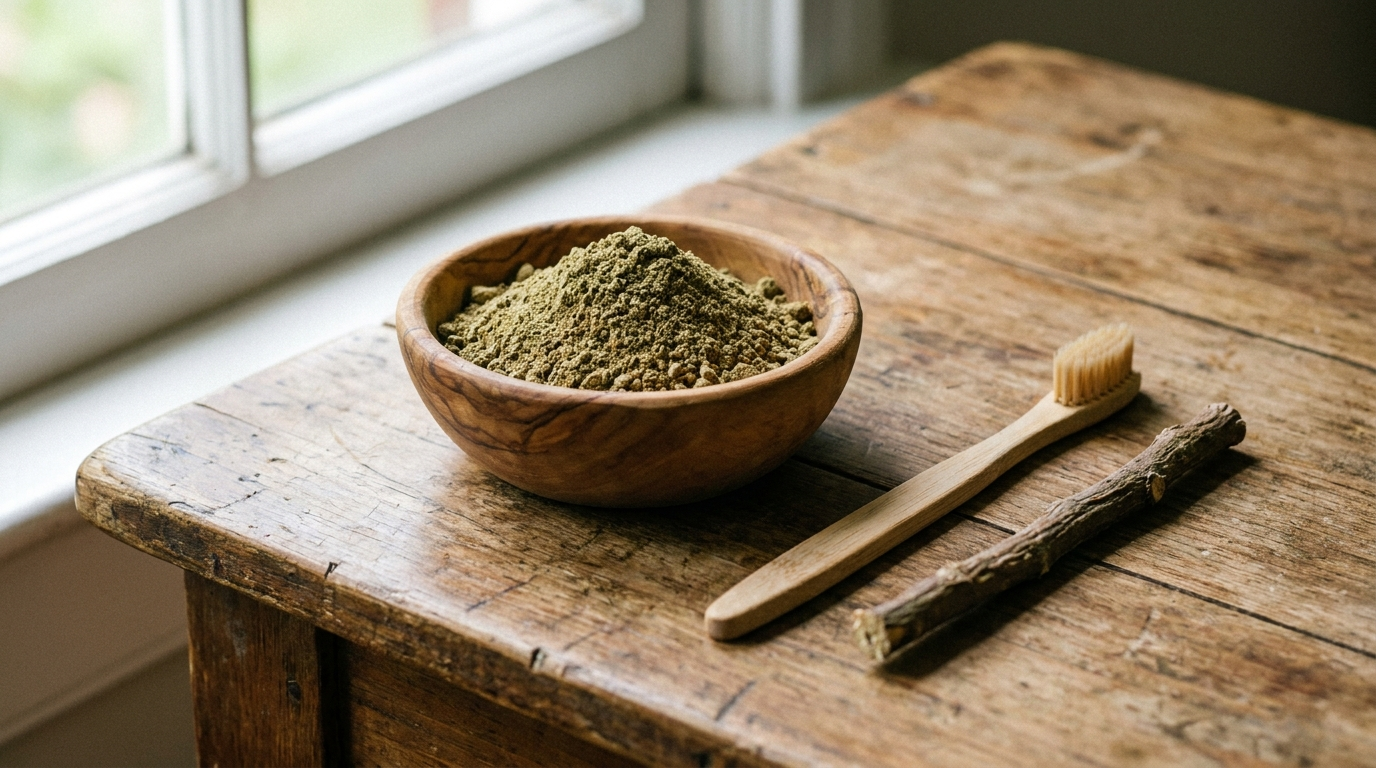
A herbal tooth powder like Dhavaldanti Powder is formulated with traditional astringent and cleansing herbs. Many people who use it describe it as leaving the mouth feeling fresh and the gums feeling comfortable after brushing. It is fluoride-free, which some households prefer, and it doesn't contain the foaming detergents (like SLS) found in many toothpaste formulas — something worth knowing if you have a sensitive mouth.
Toothpaste: Where It Still Matters
Modern fluoride toothpaste has decades of dental research behind it for cavity prevention, and dentists generally recommend it as part of a daily routine, especially for children and anyone prone to cavities. This is not a case where Ayurveda claims to replace dentistry — good oral hygiene benefits from both a sound daily routine and regular dental check-ups.
Can You Use Both?
Yes. Many people use a herbal tooth powder as part of their morning routine and continue with their regular toothpaste at night, or alternate between the two. There's no rule that says you must pick one permanently. Listen to how your mouth feels, and if you have any dental conditions, ask your dentist what routine suits you.
How to Use a Herbal Tooth Powder
- Wet your toothbrush (or finger, traditionally) lightly.
- Dip into a small amount of Dhavaldanti Powder.
- Brush gently in circular motions for about two minutes.
- Rinse thoroughly with water.

FAQ
Is herbal tooth powder safe for daily use? Yes, when used as directed, though anyone with sensitive gums should introduce any new oral care product gradually.
Does it replace toothpaste completely? That's a personal choice — many people use both. If you're prone to cavities, continue fluoride toothpaste as your dentist advises.
Can children use herbal tooth powder? Consult your paediatrician or dentist first, especially for very young children.
For guidance on building a complete Ayurvedic daily routine, Book Your Consultation →
This blog is for educational purposes only and is not a substitute for medical advice, diagnosis, or treatment. Ayurvedic products should be used under the guidance of a qualified practitioner. Do not stop any prescribed medication. Individual results may vary.