

Kansa Wand vs Jade Roller: An Ayurvedic Perspective on Facial Massage Tools
Dr Rucha Mehendale PaiBy Dr Rucha Mehendale Pai, BAMS — Ayurvedic Physician & Nadi Parikshan Expert
Key Takeaways
- The jade roller comes from Traditional Chinese skincare practice; the Kansa Wand comes from Ayurveda.
- Kansa (bronze) is specifically valued in Ayurveda for its properties, distinct from jade.
- Both work through massage — the tool material and tradition behind each differ.
- Neither tool treats a medical skin condition; both are massage aids.
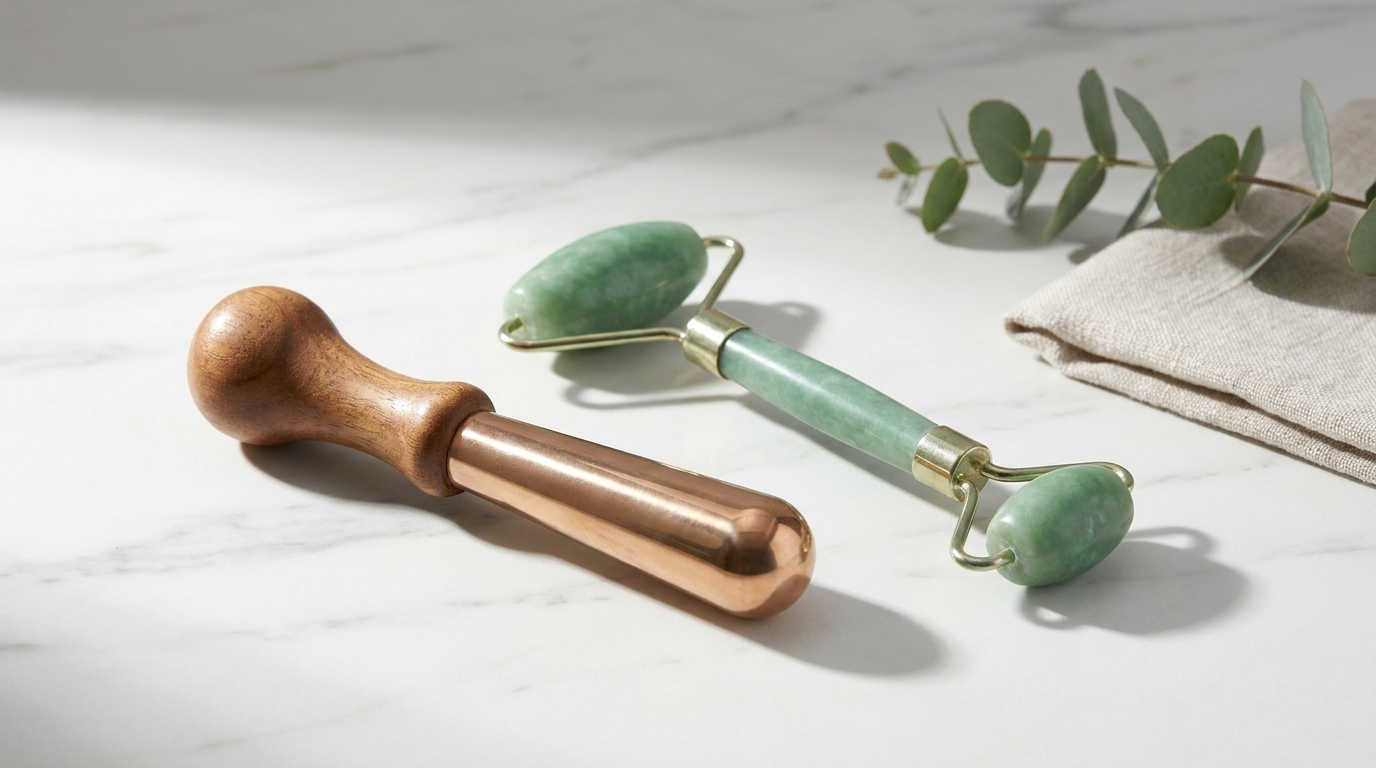
Facial massage tools have become popular worldwide, and two names come up constantly: the jade roller and the Kansa Wand. They're often lumped together as "the same kind of thing," but they come from different traditions and are made of genuinely different materials — here's how they compare.
Where Each Tool Comes From
The jade roller is rooted in Traditional Chinese skincare practice, where jade has long been valued as a stone believed to carry cooling, calming properties. The Kansa Wand, on the other hand, comes from Ayurveda, where kansa — a bronze alloy of copper and tin — has a distinct traditional role in body and facial massage (including padabhyanga, foot massage).
Why the Material Matters in Ayurveda
In Ayurvedic tradition, kansa is described as having a balancing quality, particularly associated with soothing Pitta (the dosha linked to heat and inflammation-type qualities). This is distinct from the properties classically attributed to jade in its own tradition — the two tools aren't interchangeable substitutes for each other, they represent two separate systems of thought.
What They Both Do — and Don't Do
Both tools work primarily through massage: gentle pressure and gliding motion that can support circulation and offer a relaxing self-care ritual. Neither tool is a treatment for wrinkles, acne, puffiness caused by a medical condition, or any diagnosed skin issue — they are massage aids, not medical devices.
How to Use a Kansa Wand
- Apply a few drops of facial oil, such as Kumkumadi Tailam, to clean skin.
- Glide the Navtej Kansa Wand in gentle upward and outward strokes.
- Spend a few minutes on each area — cheeks, jawline, forehead.
- Use 2–3 times a week as part of your evening routine.

To learn how to build a Kansa Wand ritual into your routine, Book Your Consultation →
This blog is for educational purposes only and is not a substitute for medical advice, diagnosis, or treatment. Ayurvedic products should be used under the guidance of a qualified practitioner. Do not stop any prescribed medication. Individual results may vary.