


How to Take Triphala the Right Way: Timing, Dosage & Common Mistakes
Dr Rucha Mehendale PaiBy Dr Rucha Mehendale Pai, BAMS
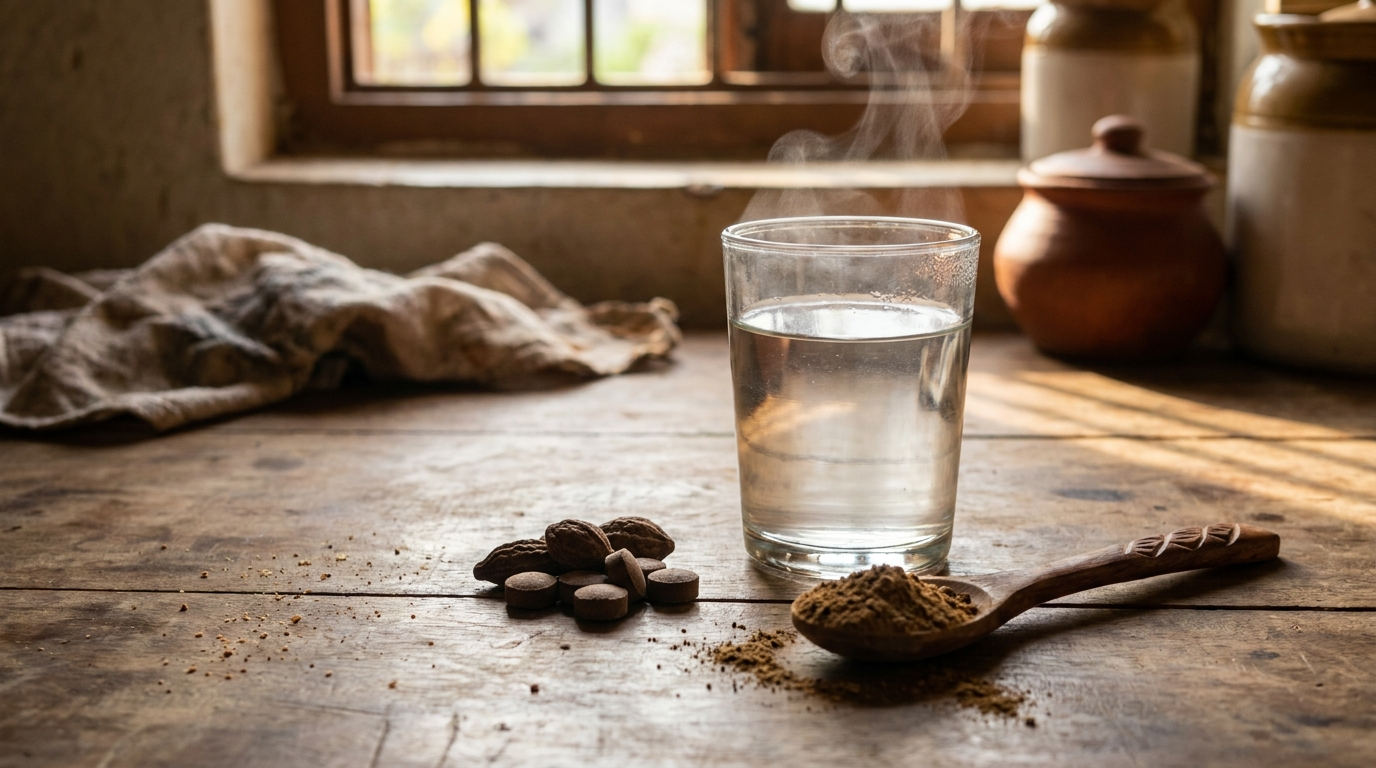
Triphala is one of the most recommended formulations in Ayurveda, and it's also one of the most misunderstood. Many people pick up a bottle, take it "whenever they remember," and give up within a week because they don't notice anything different. The reason usually isn't the herb — it's the method. Classical Ayurvedic texts are surprisingly specific about how Triphala should be taken, and getting this right matters as much as the ingredient itself.
What Is Triphala, Traditionally?
Triphala means "three fruits" — Amalaki, Bibhitaki, and Haritaki. Ayurvedic texts describe this combination as a gentle Rasayana (rejuvenative) for the digestive system, traditionally used to support regularity and comfortable digestion as part of daily routine (dinacharya).
Timing: When Should You Take It?
Classical guidance recommends Triphala at night, roughly 30-45 minutes before bed, taken with warm water. This timing is traditionally preferred because digestion is said to slow down overnight, and a gentle formulation taken before sleep is believed to support the body's natural overnight rhythm. Some practitioners also suggest early morning on an empty stomach — but night-time is the more commonly recommended window in most classical protocols.
Dosage: More Is Not Better
A common mistake is assuming that doubling the dose will "work faster." Ayurveda emphasizes starting with a lower dose and observing how your body responds before adjusting. Tablet-based formulations like Tanvi Trifla Satva make dosing far more consistent than loose churna, which is one reason many people find tablets easier to stay consistent with.
Common Mistakes People Make
1. Taking it inconsistently
Triphala is traditionally described as a long-term daily habit, not a one-time fix. Skipping days and restarting doesn't allow the body to settle into a rhythm.
2. Taking it with cold water
Warm water is preferred in classical guidance — it is believed to help the formulation settle more comfortably.
3. Expecting overnight results
Ayurveda does not promise instant results, and neither should you expect them. Give any daily herbal routine several weeks before evaluating how it fits your body.
4. Ignoring underlying diet
No herbal formulation replaces basic dietary discipline — regular meal timing, adequate water, and reduced processed food remain foundational in Ayurveda.
Who Should Be Cautious?
Pregnant or nursing women, and anyone on prescription medication for a chronic condition, should consult a qualified Ayurvedic practitioner before starting Triphala or any new herbal supplement. Never stop a doctor-prescribed medication in favour of an herbal formulation.
FAQ
Can I take Triphala every day long-term? Classical texts describe Triphala as suitable for regular daily use as part of dinacharya, though it's always wise to check in with a practitioner periodically.
Can children take Triphala? Only under the guidance of a paediatrician or Ayurvedic doctor, with an appropriately adjusted dose.

Tanvi Trifla Satva Tablets — Dr Rucha Tanvi Herbals
Classical Triphala formulation · consistent tablet dosing | ₹180
Shop Tanvi Trifla Satva →Book Your Consultation for personalised digestive-health guidance
This blog is for educational purposes only and is not a substitute for medical advice, diagnosis, or treatment. Ayurvedic products should be used under the guidance of a qualified practitioner. Do not stop any prescribed medication. Individual results may vary.